
What does a ballistic blanket actually do? The short answer: a ballistic blanket stops projectiles; a bomb blanket contains fragmentation and overpressure from an explosion. They are not interchangeable, and that mix-up is the whole reason both terms show up in the same search. A ballistic blanket is a wearable or drapeable panel of aramid fabric doing the same job as a soft armor vest, just in blanket form. A bomb blanket is a heavier-duty containment tool built to smother a detonation, not to be worn or held up as a shield against incoming fire. Get the two confused and you either under-protect a breacher or over-buy for a patrol car.
What a Ballistic Blanket Actually Is
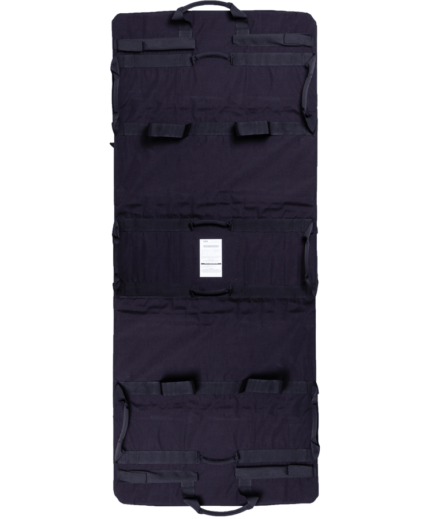
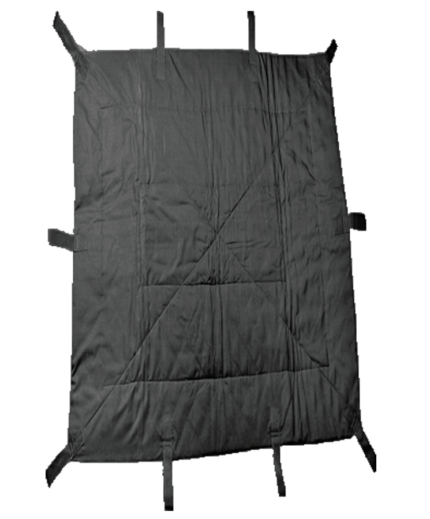
A ballistic blanket is a flexible panel of stacked aramid layers, functionally a soft armor vest without the carrier, built to catch handgun rounds and fragmentation rather than to contain an explosion. U.S. Armor’s own ballistic blankets illustrate the range: a Level II model at roughly 20.5 lb and 0.22″ thick, and a Level IIIA model at roughly 35 lb and 0.23″ thick, both in a standard 48″ x 72″ size (custom sizes are available). That’s the practical meaning of “Kevlar blanket” in this industry — a soft-armor panel, wrapped in a Cordura cover, with no metal snaps or zippers to spark or fail, and hand loops around the perimeter so it can double as an emergency litter or be suspended as a static shield.
A tactical subtype, the Breacher Blanket, trims that down to 32″ x 75″ and a lighter 14.5–24.5 lb depending on threat level, with PVC channels at both ends so it holds its shape when draped over an explosive charge and a stack of officers behind it.
What a Bomb Blanket Actually Is
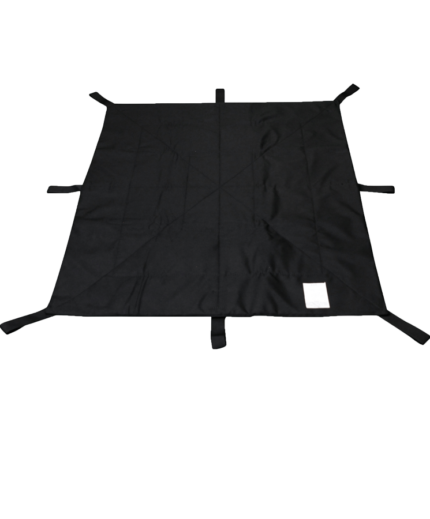
A bomb blanket — sometimes called a bomb disposal blanket or blast blanket — is built to contain an explosion, not to be worn. Its job is to smother fragmentation and blunt the overpressure wave from a detonating device, which calls for a different construction: heavier aramid layup, a shapeable, self-tenting stitch pattern that lets techs mold the blanket around an irregular object, and reinforced edges and loops so it can be draped, weighted, or stood up around a device rather than carried like a shield. U.S. Armor’s Bomb Disposal Blanket, developed with the LAPD EOD Section, is built exactly this way: a 48″ x 48″ standard panel (custom sizes available) that folds compact for storage, is rated to contain fragmentation up to roughly 1,476 fps (450 m/s), and can be paired with an aluminum stand to convert it into a fixed, hands-free containment shield.
Ballistic Blanket vs. Bomb Blanket at a Glance
| Ballistic Blanket | Bomb Blanket | |
|---|---|---|
| Threat type | Handgun rounds & fragmentation (NIJ Level II / IIIA) | Blast overpressure & fragmentation containment (IEDs, pipe bombs) |
| Typical weight | ~14.5–35 lb depending on model and size | Heavier per square foot; varies by size and construction |
| Deployment time | Seconds — grab, unroll, drape or hold | Minutes — positioned and shaped around the device by trained personnel |
| Storage | Rolled or folded; vehicle rack, wall mount, or gear bag | Folded compact; case or dedicated EOD kit storage |
| Primary users | Patrol officers, tactical teams, school/facility security, industrial safety | EOD/bomb squad technicians, specially trained response units |


Deployment Scenarios
EOD and Suspect-Package Containment
This is the bomb blanket’s core job: a technician approaches a suspicious package or device and drapes or molds the blanket around it, using its self-tenting stitch pattern to direct blast pressure and fragmentation away from personnel and property, sometimes with an aluminum stand to hold it in place hands-free.
Explosive Breaching
Breaching teams use a purpose-built blanket like the Breacher Blanket over the charge itself, protecting the detonator and the stack of officers behind from blast pressure and fragmentation during a dynamic entry — a ballistic-blanket application, not a bomb-blanket one, since the goal is protecting people positioned nearby rather than containing the full detonation.
School and Public-Building Active-Shooter Response
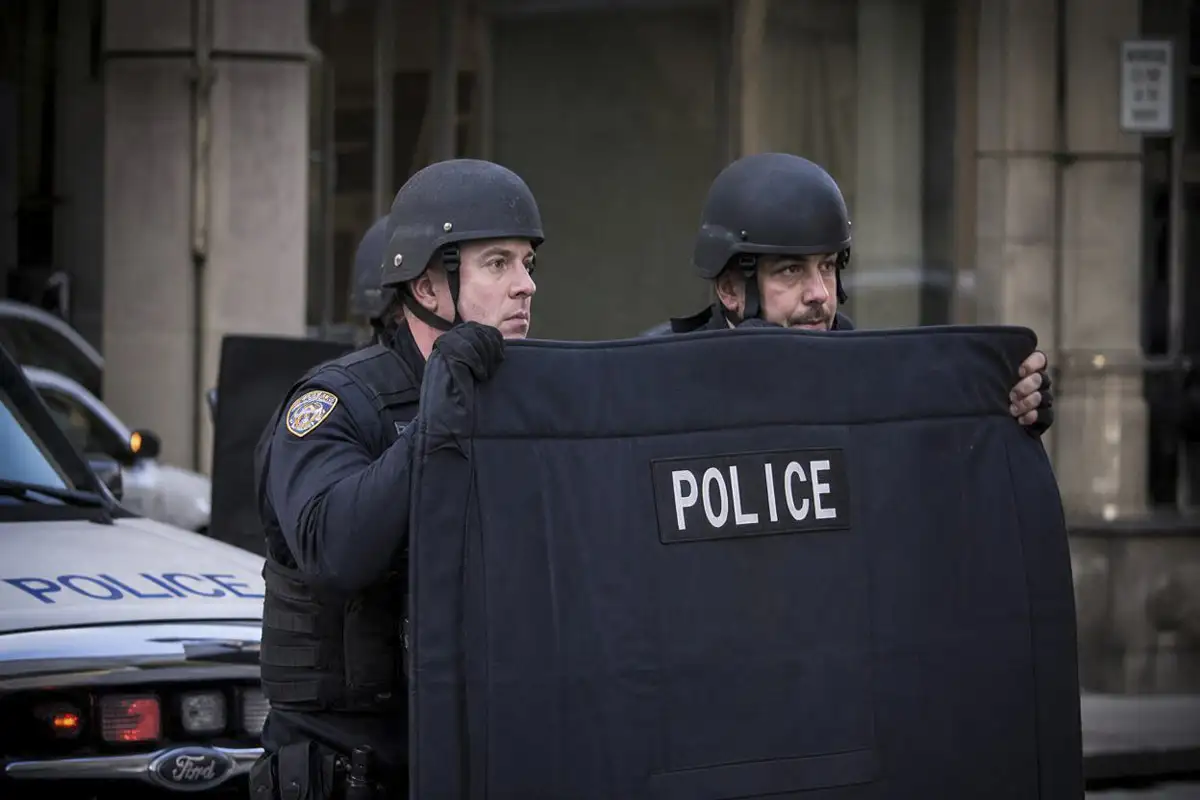
Ballistic blankets get pre-staged in schools, hospitals and government buildings as a rapid-deployment tool: an officer or trained staff member can grab one to evacuate students behind cover, shield a group in place, or cover a downed officer or civilian while backup arrives. See our active shooter body armor guide for how blankets fit into a broader response loadout.
Vehicle and Patrol-Car Deployment
A rolled ballistic blanket stored in a trunk or rack takes seconds to grab, making it a practical addition next to a patrol rifle plate or door panel — instant portable cover for an officer caught in the open, or for shielding a bystander during an active incident.
Executive Protection and Transport
Protective details keep a ballistic blanket in a vehicle or go-bag as a low-profile option for covering a principal during a rapid movement between a vehicle and a building, when a full plate carrier isn’t practical but a moment of soft-armor coverage is worth having on hand.
What a Ballistic Blanket Will NOT Do
Set expectations honestly, because this is where departments get burned. A soft ballistic blanket rated to NIJ Level II or IIIA stops handgun rounds and fragmentation — it is not rated against rifle threats, and a 5.56 or 7.62 round will defeat it. If your risk profile includes rifle-caliber threats, you need a hard-armor solution instead; our ballistic shields, including rifle-rated Level III+ options, are built for that job. Edge coverage is limited too — a blanket protects what it’s actually covering, and a round or fragment that catches an exposed edge, gap, or fold isn’t stopped just because the material nearby is rated. And like any soft armor, a blanket is not engineered for reliable multi-hit performance at the same point of impact; treat it as protection for a single serious event, not a shield you expect to take repeated rounds in the same spot. For a deeper breakdown of what NIJ levels actually guarantee and don’t, read our guide to decoding NIJ ratings.
Care, Inspection and Service Life
Store blankets rolled or folded along their built-in fold lines, away from prolonged UV exposure, moisture and extreme heat, all of which degrade aramid fibers over time. Inspect before and after every deployment: check the Cordura cover for tears or abrasion, confirm the PVC stiffening channels and hand loops are intact, and look for any soft spots, delamination or odor in the ballistic panel itself that would suggest moisture intrusion. Treat any blanket that’s taken a hit as retired from ballistic service regardless of appearance — soft armor doesn’t visibly show a compromised zone the way a cracked hard plate does. Beyond that, follow the same manufacturer inspection and warranty-date guidance you’d apply to a soft armor vest; our body armor maintenance guide covers the inspection routine in detail.
Choosing the Right One
Start with one question: are you protecting against being shot, or containing something that’s about to explode? If it’s the former — patrol, active-shooter response, executive protection, breaching cover — you want a ballistic blanket, sized and rated to the threat level your risk assessment calls for. If it’s the latter — a suspicious package, an IED, a device that needs to be contained rather than shielded against — you need a bomb blanket built and tested for that job, deployed by trained personnel. Departments running both breaching operations and EOD response typically stock both, since neither one substitutes for the other.
Ready to spec out the right blanket for your team? Browse the full ballistic blanket lineup, or find a U.S. Armor dealer to talk through threat level, size and quantity for your department.