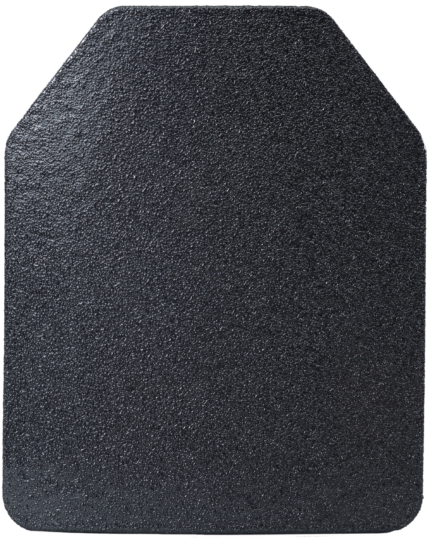

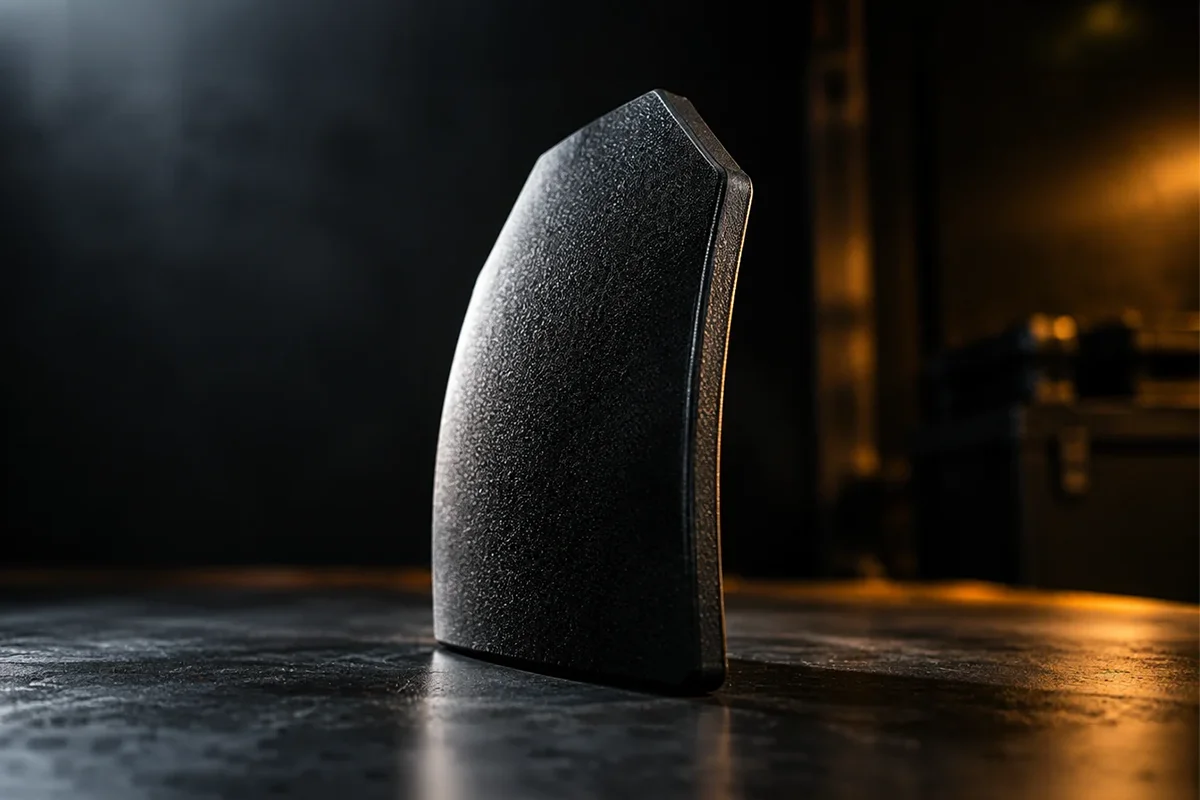
SAPI vs shooters cut comes down to one tradeoff: a SAPI cut keeps more upper-chest coverage, while a shooters cut clips the top corners deeper so a rifle stock seats cleanly in the shoulder pocket. Neither shape changes a plate’s protection rating, which is set by certification. What changes is how much of the torso the plate covers, how much it weighs, how it moves with you and how it fits your carrier. This SAPI vs shooters cut guide from U.S. Armor Corporation walks through five tradeoffs, using real per-cut weights from one plate family, plus where swimmer cut plates and multi curve plates fit into the decision.
SAPI vs Shooters Cut: What’s the Difference?
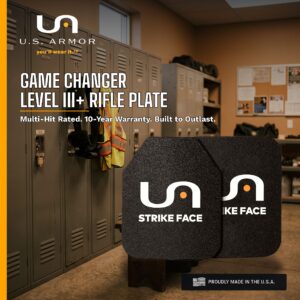
A SAPI (Small Arms Protective Insert) cut has modestly angled upper corners and follows the military’s lettered sizing. A shooters cut angles the upper corners more aggressively to clear the shoulder pocket for rifle shouldering and arm movement. Both protect the same vital zone at the same certified level; shooters cut vs SAPI is a coverage-versus-mobility choice.
The Four Common Plate Cuts at a Glance
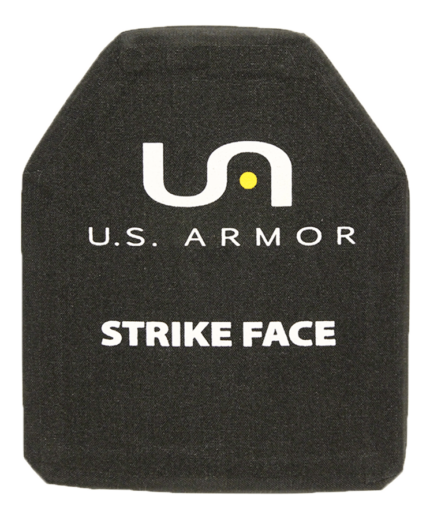
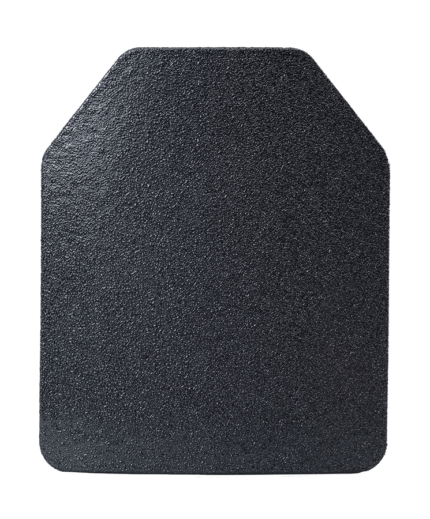
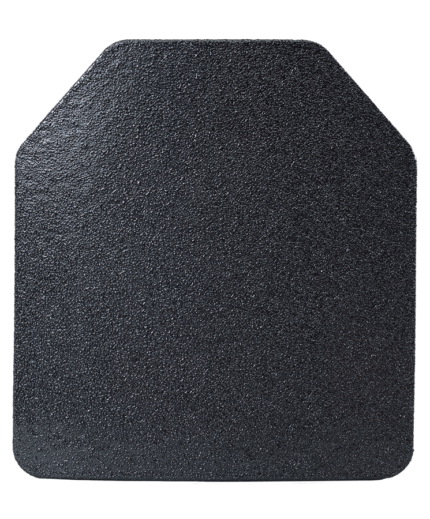
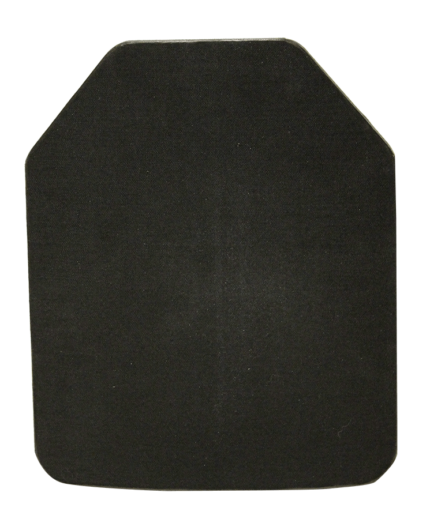
The SAPI vs shooters cut question makes more sense once you see all four shapes side by side. Most armor plate cuts fall into four families. The names vary by manufacturer, but the geometry is consistent: the more the upper corners are clipped, the more freedom the arms and rifle stock get, and the less upper-chest area the plate covers.
| Cut | Upper-corner geometry | Relative coverage | Mobility | Typical user |
|---|---|---|---|---|
| Full / square cut | No corner clipping | Highest | Lowest | Static posts, vehicle and perimeter duty, backpack or back-plate use |
| SAPI / ESAPI cut | Moderate angled clip | High | Moderate | Military and contractors, agencies standardizing on lettered sizes |
| Shooters cut | Steeper angled clip | Moderate-high | High | Patrol rifle officers, SWAT, most plate carrier users |
| Swimmer cut | Deepest clip, often down the sides | Lowest of the four | Highest | Entry teams, maritime and high-movement roles, smaller-frame wearers |

Tradeoff 1: Coverage, and What the Corner Cuts Remove
Coverage is the first tradeoff in any SAPI vs shooters cut comparison. Every corner cut removes material from the upper chest, above and outside the heart and great vessels. That is why plate designers accept it: the cardiac box sits low and central, so a well-sized plate of any cut still covers it. The cost is protection at the upper chest edges and near the collarbone, where a full or SAPI cut keeps more armor.
In the SAPI vs shooters cut decision, the difference is a small triangle at each upper corner. A swimmer cut removes considerably more. For a wearer who spends most of the shift standing behind cover or in a vehicle, that extra triangle is cheap insurance. For a wearer who must shoulder a rifle repeatedly, it may be worth giving up. That is the core of SAPI vs shooters cut coverage.
Tradeoff 2: Weight, With Real Per-Cut Figures From One Plate Family
How much lighter is a shooters cut plate? In U.S. Armor Corporation’s CR-3000 data, the 8″×10″ multi-curve shooter cut weighs 2.13 lbs versus 2.30 lbs for SAPI/ESAPI, a 0.17 lb saving. At 10″×12″ the gap narrows to 0.04 lbs. Savings vary by model and size.
Weight is the second SAPI vs shooters cut tradeoff buyers ask about. The figures below come from the Model CR-3000 Level III rifle plate product page, a 1.15″ composite, stand-alone plate certified to NIJ 0101.06. Few comparisons of shooters cut vs SAPI show manufacturer weights for both cuts in a single plate family, which removes material and thickness differences from the comparison.
| Size (multi-curve) | Shooters cut | SAPI/ESAPI cut | Difference |
|---|---|---|---|
| 8″ × 10″ | 2.13 lbs | 2.30 lbs | 0.17 lbs (about 7%) |
| 10″ × 12″ | 3.22 lbs | 3.26 lbs | 0.04 lbs (about 1%) |
The takeaway for SAPI vs shooters cut weight: within one material, cut is a minor weight lever. Material choice (steel, ceramic composite or polyethylene) and plate size move the scale far more. If weight is the main concern, start with our guide to armor plate materials, then choose the cut for fit and mobility.

Tradeoff 3: Mobility and Rifle Shouldering
Which plate cut works best with a rifle? For most patrol and SWAT shooters, a shooters cut. Its steeper upper corners leave room for the rifle stock in the shoulder pocket, so the stock does not ride on the plate edge. SAPI works for many wearers; swimmer cut adds clearance for compact or high-movement roles.
Stock Placement and Shoulder Clearance: SAPI vs Shooters Cut
Mobility is where the SAPI vs shooters cut difference is easiest to feel. When a rifle stock lands on the plate instead of the shoulder pocket, the shooter cants the rifle, raises the stock or shortens the length of pull to compensate. All three slow follow-up shots. The best plate cut for rifle shouldering is the one that lets the stock sit inside the pocket with the plate still covering the cardiac box. Test it with the actual carrier, plate and rifle the officer carries, not just a bare plate held against the chest. A quick SAPI vs shooters cut test on the range, with each plate in the same carrier, settles most debates.
When a Swimmer Cut Makes Sense
Who should use a swimmer cut plate? Wearers who need maximum arm travel: entry and breaching teams, maritime and climbing roles, and smaller-frame wearers whose shoulders crowd a standard corner. The tradeoff is the largest loss of upper-chest coverage, so swimmer cut plates suit missions where mobility clearly outweighs it.
U.S. Armor Corporation’s Model 4800 Level IV rifle plate is offered in shooter, swimmer and SAPI cuts, which makes it a useful example of how one plate line can serve a whole team with different cut needs.
Tradeoff 4: Curvature (Flat, Single-Curve and Multi-Curve)
Do multi-curve plates provide the same protection as single-curve plates? At the same NIJ certification level, the rated protection is the same. Curvature mainly improves fit: a multi-curve plate bends side to side and top to bottom, so it sits closer to the chest with fewer pressure points and less edge gap.
| Factor | Single-curve plate | Multi-curve plate |
|---|---|---|
| Fit | Curves side to side only | Curves side to side and top to bottom |
| Pressure points | More likely at top and bottom edges | Fewer; contours to the torso |
| Manufacturing complexity | Lower | Higher |
| NIJ 0101.07 crown shot | Applies to curved plates | Applies to curved plates |
Curvature applies to either side of the SAPI vs shooters cut choice: both cuts are commonly offered multi-curve. When comparing single curve vs multi curve options, also check the plate’s thickness and material. The polyethylene Model 23707, for example, is a multi-curve plate listed at 1″ (25 mm) thick.
Why NIJ 0101.07 Now Tests the Crown of Curved Plates
What is the crown shot in NIJ 0101.07? The updated standard reconfigures perforation and backface deformation testing on hard armor plates to include a strike on the crown of curved plates, the highest point of the curve. NIJ says this aligns its testing with U.S. Army hard armor testing.
According to the NIJ Standard 0101.07 overview, the crown “may be more vulnerable to penetration due to characteristics of the materials or construction methods used to manufacture plates.” The new standard also renames protection levels: Level III becomes RF1 and Level IV becomes RF3, with a new intermediate RF2 level. Plates certified under NIJ 0101.06 remain listed under their existing ratings, so always read the standard and level on the label. For buyers comparing multi curve plates on either side of SAPI vs shooters cut, the takeaway is simple: curvature is a fit feature, and the newer test method makes sure the curve itself is held to the same ballistic bar.
Tradeoff 5: Sizing the Plate to the Wearer and the Carrier
How do I choose a plate size? Measure from the base of the throat (suprasternal notch) to just above the navel, and across the chest between the nipples. Match a plate that covers the heart and upper vital organs, then confirm it fits your carrier’s plate pocket. Size, not cut alone, determines carrier fit.
Sizing matters as much as the SAPI vs shooters cut choice itself. Use this three-step sizing check:
- Measure. Take vertical and horizontal torso measurements while wearing your duty uniform. Our guide on how to measure for body armor covers placement in detail.
- Match the plate to the vital zone. The top edge should sit about two finger-widths below the suprasternal notch, with the cardiac box fully covered when you are seated and standing.
- Confirm the carrier pocket. Check the plate pocket dimensions on your plate carrier, then follow the plate carrier setup guide for height and cummerbund adjustment.
SAPI/ESAPI Sizes vs. Inch-Based Sizes
Plate sizing systems also differ across the SAPI vs shooters cut divide. Inch-based plates (8″×10″, 10″×12″) are common in law enforcement, while SAPI/ESAPI plates follow military sizing. When a buyer asks what sapi plate size they need, the answer depends on torso dimensions, not body weight. The CR-3000 lists these multi-curve SAPI/ESAPI sizes and weights:
| SAPI/ESAPI size | Weight (CR-3000) | Inch-based neighbor |
|---|---|---|
| 7.25″ × 11.5″ | 2.39 lbs | Narrower and longer than 8″ × 10″ |
| 8.75″ × 11.75″ | 2.95 lbs | Between 8″ × 10″ and 10″ × 12″ |
| 9.5″ × 12.5″ | 3.43 lbs | Close to 10″ × 12″ |
| 10.25″ × 13.25″ | 3.95 lbs | Larger than 10″ × 12″ |
| 11″ × 14″ | 4.48 lbs | Largest common size |
Agencies that issue an ESAPI plate size to military-trained officers and inch-based plates to everyone else should standardize carrier pockets accordingly, or the plate will shift in the pocket.
Which Plate Cut Fits Your Mission?
Here is how the SAPI vs shooters cut tradeoffs map to common roles. Use this matrix as a starting point, then confirm fit on the wearer with the actual carrier and weapon.
| Role | Recommended cut | Why |
|---|---|---|
| Patrol rifle officer | Shooters cut | Clean stock placement with strong coverage |
| SWAT entry | Shooters or swimmer cut | Arm travel for breaching, climbing and shooting from awkward positions |
| Long-shift security | SAPI or full cut | Maximum coverage when rifle shouldering is rare |
| Military / contractor | SAPI / ESAPI | Matches issued carriers and lettered sizing |
| Smaller-frame wearer | Shooters or swimmer cut | Prevents the upper corners from crowding the shoulders |
The SAPI vs shooters cut decision is rarely about which plate is better in every case. It is about matching coverage, weight and mobility to the job. Browse U.S. Armor Corporation’s Level III rifle plates and Level IV rifle plates to compare cuts, sizes and curvature, or contact our team to get fitted.