
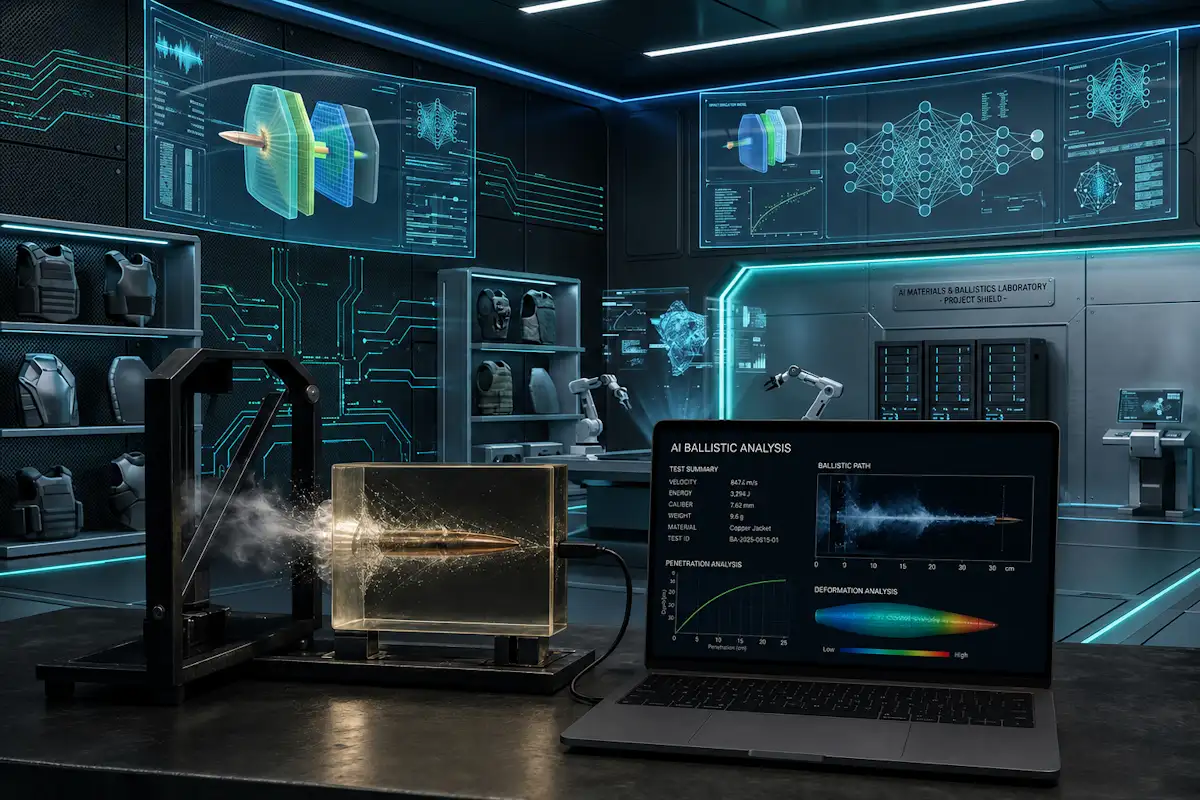
Artificial intelligence is reshaping industries that rely on precision, performance, and data—and the ballistic protection sector is no exception. From advanced material development to automated quality control, AI transforms ballistic research and testing by helping engineers analyze performance faster, identify potential weaknesses earlier, and optimize manufacturing processes with greater confidence.
While AI doesn't replace physical testing or established certification standards, it has become a valuable tool for accelerating ballistic research, improving AI manufacturing, and supporting the next generation of armor innovation. As technology evolves, manufacturers can use AI to complement traditional testing methods, enhance consistency, and make more informed design decisions.
At U.S. Armor Corporation, innovation has always been driven by performance, reliability, and a commitment to protecting those who rely on body armor every day. Understanding how artificial intelligence supports modern research provides valuable insight into the future of protective equipment.
How AI Transforms Ballistic Research, Development and Testing
Developing high-performance ballistic products requires extensive testing, engineering, and quality verification. Traditionally, evaluating new materials or manufacturing methods has involved multiple rounds of physical testing that can require significant time and resources.
Today, AI ballistic testing enables researchers to analyze massive datasets, model performance scenarios, and identify promising design improvements before physical prototypes are produced.
The result is a more efficient development process that supports continuous improvement while maintaining rigorous safety standards.
Accelerating AI Material Analysis
One of the most promising applications of artificial intelligence in body armor development is its ability to dramatically accelerate material analysis. Traditional research often requires engineers to evaluate countless combinations of fibers, composites, and protective layers through lengthy cycles of modeling, prototype manufacturing, and ballistic testing. AI significantly shortens this process by analyzing massive datasets to identify patterns that would be difficult or impossible for humans to detect on their own.
Using advanced machine learning algorithms, AI can evaluate how different materials interact under a wide range of conditions, including impact resistance, long-term durability, environmental exposure, and structural performance. Rather than relying solely on trial-and-error experimentation, engineers can focus on the most promising material combinations before producing physical prototypes.
Key factors AI can analyze include:
- Fiber and composite material characteristics, impact behavior, and layering configurations.
- Long-term material fatigue, environmental performance, and overall durability under real-world operating conditions.
Rather than replacing laboratory testing, AI serves as a powerful decision-support tool that helps researchers prioritize the designs most likely to succeed. By reducing unnecessary experimentation and guiding engineers toward higher-performing solutions more quickly, artificial intelligence is helping accelerate ballistic innovation while lowering development costs and bringing more advanced protective equipment to market faster.
Improving Manufacturing Automation
Artificial intelligence is transforming body armor manufacturing by making production processes more efficient, consistent, and data driven. Rather than relying solely on manual oversight, AI-powered manufacturing systems continuously monitor equipment performance, analyze production data in real time, and detect process variations before they affect product quality. This allows manufacturers to make proactive adjustments that improve operational efficiency while reducing waste and minimizing costly downtime.
AI also helps streamline complex manufacturing operations by optimizing machine calibration, production scheduling, and material flow throughout the facility. By tracking raw materials, monitoring equipment health, and forecasting maintenance needs, manufacturers can keep production running smoothly while reducing unexpected interruptions. Predictive maintenance, in particular, enables service to be performed before equipment failures occur, helping extend machinery life and maintain consistent output.
Key manufacturing functions supported by AI include:
- Equipment calibration, process optimization, and production scheduling to improve efficiency and maintain consistent quality.
- Material tracking, predictive maintenance, and real-time performance monitoring to reduce downtime, improve resource utilization, and support reliable manufacturing operations.
While skilled technicians and rigorous quality assurance remain essential, AI serves as a powerful manufacturing tool that enhances decision-making, improves production consistency, and helps deliver high-quality body armor more efficiently.

Predicting Long-Term Durability
Long-term durability is one of the most important considerations in body armor development, as protective equipment must continue performing reliably throughout its intended service life. Traditionally, evaluating durability requires months or even years of environmental exposure and repeated testing. Artificial intelligence is helping accelerate this process by analyzing historical performance data, laboratory test results, and environmental conditions to predict how materials may change over time.
Using predictive modeling, AI can estimate how ballistic materials and protective components may respond to prolonged exposure to heat, humidity, repeated daily use, varying storage conditions, and the natural aging of fibers and composite materials. By identifying potential performance trends early in the development cycle, engineers can better understand which designs are likely to maintain their protective capabilities and which may require further refinement.
Key factors AI evaluates include:
- Environmental influences such as temperature, moisture, storage conditions, and repeated handling that can affect long-term material performance.
- Historical testing data and material aging patterns to help forecast durability, identify potential weaknesses, and prioritize additional validation.
While predictive modeling cannot replace comprehensive laboratory and field testing, it provides valuable insights that help manufacturers focus durability studies more effectively. By guiding product development before long-term testing is complete, AI enables researchers to accelerate innovation while continuing to validate performance through rigorous real-world evaluation.
Creating Digital Twins for Product Development
Digital twins are highly detailed virtual models that replicate physical products throughout their development lifecycle.
For body armor manufacturers, digital twins can simulate:
- Material interactions
- Structural changes
- Stress distribution
- Design modifications
- Manufacturing adjustments
By evaluating virtual prototypes before production, engineers can refine designs more efficiently and reduce costly revisions.
Digital twins have become an increasingly valuable component of modern defense technology research.
Running Advanced Testing Simulations
Artificial intelligence is enhancing the way body armor is evaluated by enabling engineers to perform advanced computer simulations long before physical prototypes reach the testing range. Traditional ballistic testing requires significant time, specialized equipment, and multiple prototype iterations. AI-powered simulation software accelerates the development process by allowing researchers to evaluate thousands of design variations and performance scenarios in a virtual environment.
These simulations can model how body armor may respond to different projectile types, multiple impact locations, energy transfer, material deformation, and the structural behavior of layered ballistic systems. By analyzing these complex interactions, engineers gain valuable insight into how changes in materials, construction methods, or armor geometry could influence overall performance. This allows promising designs to be refined before physical prototypes are manufactured, reducing development time and helping focus resources on the most effective solutions.
Key capabilities of AI-driven simulations include:
- Modeling projectile impacts, multiple-hit scenarios, energy transfer, and layer deformation to better understand how protective systems absorb and distribute ballistic forces.
- Evaluating structural responses across a wide range of virtual test conditions, helping engineers identify potential design improvements and prioritize future laboratory testing.
While simulation technology has become an indispensable engineering tool, it does not replace certified ballistic testing. Physical laboratory evaluations remain essential for validating performance, meeting regulatory requirements, and confirming that body armor satisfies established safety standards. Instead, AI-powered simulations complement traditional testing by providing faster insights that help accelerate research, improve product development, and support more informed engineering decisions.
Enhancing Quality Inspection
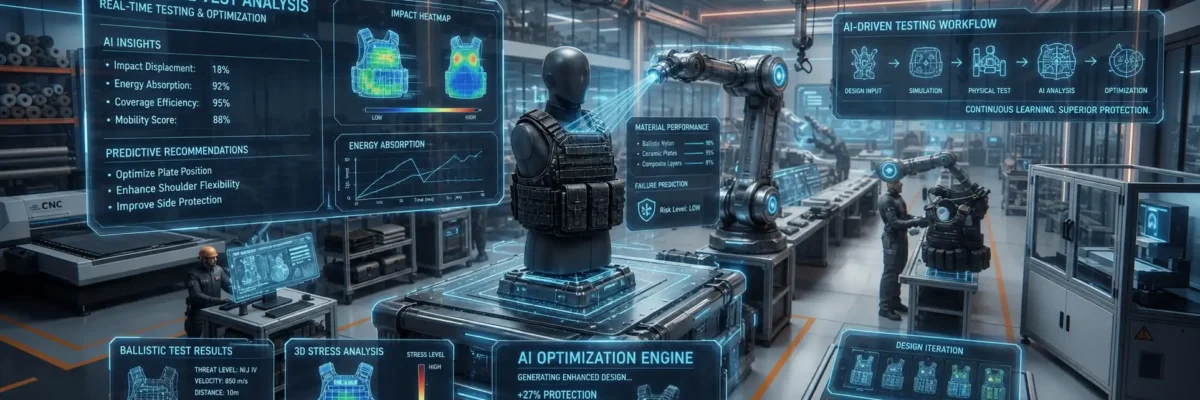
Artificial intelligence is reshaping quality assurance by making product inspections faster, more accurate, and more consistent throughout the manufacturing process. One of the fastest-growing applications is the use of AI-powered computer vision systems that continuously examine body armor components as they move through production. Unlike manual inspections, which can vary depending on human observation and fatigue, automated systems analyze every product using high-resolution imaging and advanced pattern recognition to identify even subtle manufacturing inconsistencies.
By comparing each component against predefined quality standards, AI can detect issues that might otherwise go unnoticed, including surface imperfections, material misalignment, inconsistent ballistic layer placement, assembly defects, and dimensional variations. Identifying these problems early allows manufacturers to correct production issues before products advance to later manufacturing stages, reducing material waste, minimizing costly rework, and improving overall production efficiency.
Key quality inspection capabilities include:
- Detecting surface defects, material alignment issues, layer inconsistencies, and assembly variations with high speed and repeatable accuracy.
- Monitoring dimensional tolerances and manufacturing consistency in real time to support process improvements and maintain uniform product quality.
Although AI significantly enhances inspection capabilities, it complements rather than replaces established quality assurance procedures. Skilled technicians and rigorous testing remain essential for verifying that finished body armor meets performance specifications and manufacturing standards. By combining automated inspection with human expertise, manufacturers can improve consistency, reduce defects, and deliver higher-quality protective equipment more efficiently.
Supporting Smarter Ballistic Research
AI enables researchers to organize and analyze enormous amounts of ballistic performance data.
Instead of reviewing thousands of individual test results manually, machine learning algorithms can identify meaningful trends, correlations, and opportunities for improvement.
This data-driven approach strengthens ongoing ballistic research and helps engineers make evidence-based design decisions.
Reducing Manufacturing Variability
Consistency is critical in the production of body armor, where even small variations in materials or manufacturing processes can influence overall product quality. Artificial intelligence helps manufacturers achieve greater process control by continuously monitoring production data, equipment performance, and manufacturing conditions in real time. Instead of waiting until a product reaches final inspection, AI can detect subtle process deviations as they occur, allowing corrective actions to be taken before quality is affected.
By analyzing trends across the production line, AI identifies changes that could lead to inconsistent material placement, equipment calibration issues, dimensional variations, or other manufacturing irregularities. This proactive approach helps maintain tighter production tolerances, reduces variability between manufacturing batches, and supports a more reliable and repeatable production process.
Key benefits of AI-driven production monitoring include:
- Improving manufacturing repeatability by identifying process variations early and helping maintain consistent production standards.
- Reducing defect rates, minimizing material waste, optimizing production efficiency, and increasing confidence that finished products meet established quality requirements.
Although experienced manufacturing teams remain essential to quality control, AI provides an additional layer of oversight that enhances precision and operational efficiency. By improving consistency throughout the production process, artificial intelligence supports continuous innovation while helping manufacturers deliver body armor that meets demanding performance and quality expectations.
Accelerating Product Development
Developing new body armor technologies is a complex process that often requires years of research, material evaluation, prototype development, laboratory testing, and certification before a product is ready for deployment. Artificial intelligence is helping streamline many stages of this development cycle by providing engineers with faster access to meaningful data and insights that support more informed design decisions. Rather than relying solely on traditional trial-and-error methods, AI enables researchers to evaluate a wider range of design possibilities in significantly less time.
By analyzing material performance, optimizing prototype configurations, and automating the review of large testing datasets, AI helps engineers identify promising solutions earlier in the research process. It also supports rapid design iterations by predicting how changes to materials, construction methods, or product geometry may influence overall performance before physical prototypes are built. This allows development teams to focus their resources on the concepts with the greatest potential for success.
Key ways AI accelerates product development include:
- Prioritizing material candidates, optimizing prototype designs, and automating complex data analysis to improve engineering efficiency.
- Supporting faster design iterations and more informed decision-making, allowing researchers to refine products more quickly while reducing unnecessary development cycles.
Although AI can significantly improve research and engineering workflows, every new body armor design must still undergo comprehensive laboratory testing, certification, and quality validation before reaching the field. By reducing development time without compromising rigorous evaluation standards, artificial intelligence is helping manufacturers respond more effectively to evolving operational requirements while continuing to advance protective technology.

Driving the Future of Defense Technology
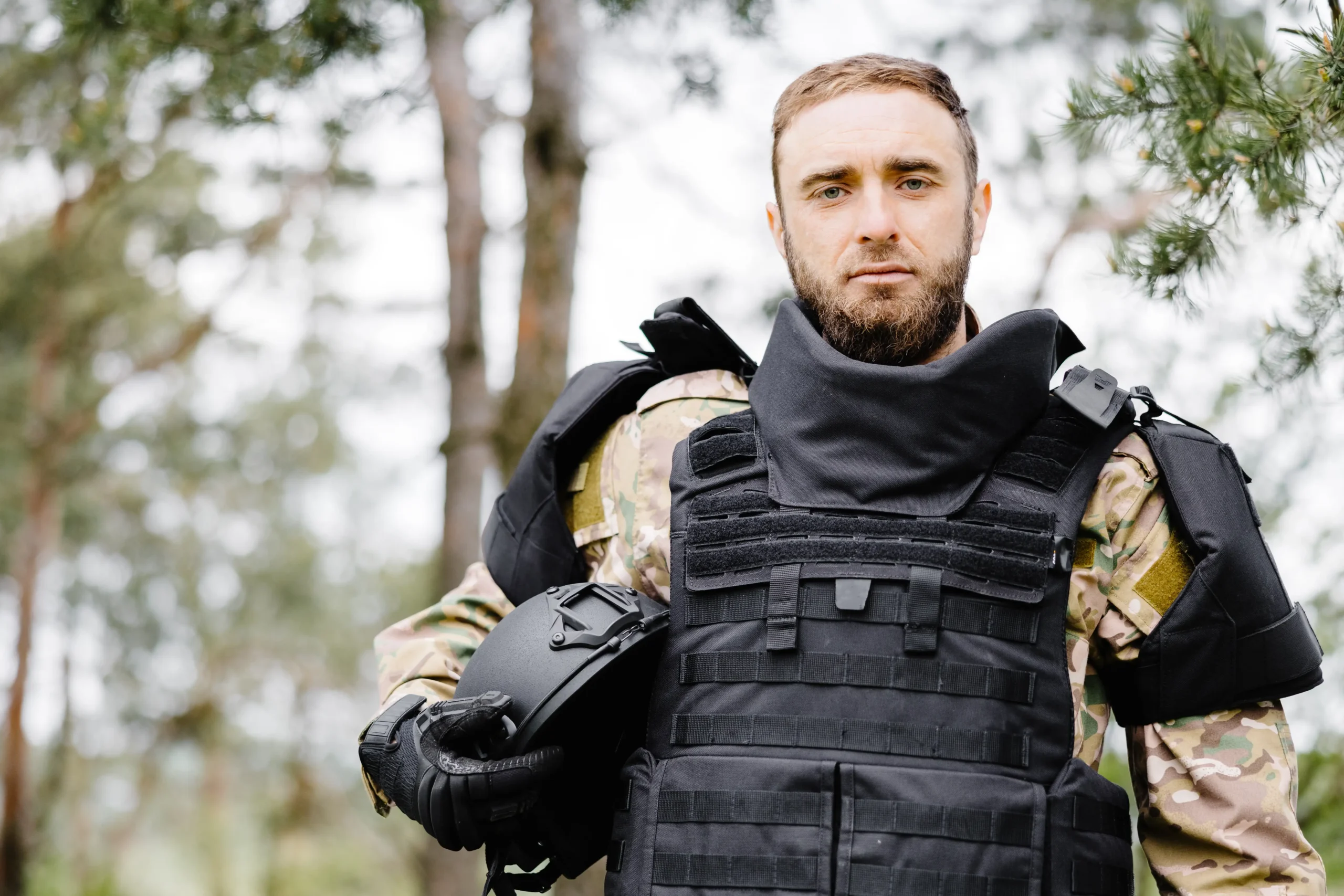
Artificial intelligence is expected to play an increasingly important role in the future of body armor and defense technology as advances in materials science, manufacturing, and computational engineering continue to evolve. As AI systems become more sophisticated, they will be capable of processing larger datasets, performing more complex analyses, and providing engineers with deeper insights throughout every stage of product development—from initial material selection to manufacturing, quality assurance, and long-term performance evaluation.
Future AI applications are likely to extend well beyond today's capabilities. Researchers anticipate increasingly adaptive material modeling that can evaluate advanced composites with greater accuracy, real-time production optimization that continuously improves manufacturing efficiency, predictive maintenance systems that maximize equipment reliability, and more intelligent supply chain management that helps ensure critical materials are available when needed. At the same time, next-generation simulation environments will enable engineers to model increasingly realistic operational scenarios, further accelerating research while reducing unnecessary prototype development.
Potential future advancements include:
- More intelligent material modeling, advanced simulation environments, and real-time manufacturing optimization that support faster, data-driven engineering decisions.
- Enhanced predictive maintenance, smarter supply chain management, and increasingly connected production systems that improve efficiency, reliability, and overall manufacturing performance.
Despite these technological advances, artificial intelligence is not expected to replace the expertise of engineers, material scientists, or quality assurance professionals. Instead, it will continue to serve as a powerful decision-support tool that complements human knowledge, rigorous laboratory testing, and established certification standards. By combining AI-driven insights with scientific expertise and proven validation methods, the defense industry will be better positioned to develop safer, more effective, and more innovative protective technologies for the future.
The Future of AI Ballistic Testing
The future of AI ballistic testing lies in combining computational intelligence with proven engineering practices.
Artificial intelligence excels at identifying patterns, processing vast amounts of data, and accelerating research. However, real-world ballistic testing remains the benchmark for validating product performance, meeting certification standards, and ensuring user safety.
The most effective approach brings together AI-driven insights, experienced engineers, and comprehensive laboratory testing to produce reliable protective solutions.
Frequently Asked Questions with how AI Transforms Ballistic Research
Can AI improve armor development?
Yes. AI can accelerate material analysis, optimize design iterations, identify performance trends, and support engineering decisions throughout the product development process. While it enhances efficiency, physical testing and certification remain essential for verifying ballistic performance.
Is AI replacing ballistic testing?
No. AI is a powerful research and engineering tool, but it does not replace certified ballistic testing. Physical testing is still required to validate product performance, confirm compliance with applicable standards, and ensure real-world reliability.
How accurate are AI simulations?
Modern AI simulations can provide valuable predictive insights when based on high-quality data and validated engineering models. However, simulations are designed to complement laboratory testing rather than serve as a substitute for live ballistic evaluations.
What industries use AI testing?
AI-supported testing is used across numerous industries, including defense, aerospace, automotive, medical devices, advanced manufacturing, construction materials, and industrial engineering. Organizations rely on AI to improve research, streamline development, and enhance quality control.
Does AI reduce manufacturing defects?
AI-powered inspection systems can help identify inconsistencies, process variations, and potential defects earlier in production. When combined with experienced quality teams and established manufacturing controls, AI can improve consistency and reduce waste.
Can AI shorten product development?
Yes. By accelerating data analysis, material evaluation, design optimization, and virtual simulations, AI can reduce development timelines for many engineering tasks. Final products, however, still require comprehensive physical testing, certification, and quality assurance before entering service.
Advancing Protection Through Innovation
Artificial intelligence is opening new possibilities for ballistic research, AI manufacturing, predictive testing, quality assurance AI, and next-generation armor innovation. While AI is transforming how engineers develop and refine protective solutions, its greatest value comes from working alongside proven manufacturing practices, experienced professionals, and rigorous real-world testing.
At US Armor, innovation is driven by a commitment to quality, performance, and the people who depend on reliable protection. As advances in artificial intelligence body armor research continue to shape the future of defense technology, staying informed about emerging technologies helps organizations make better decisions about protective equipment and long-term safety.